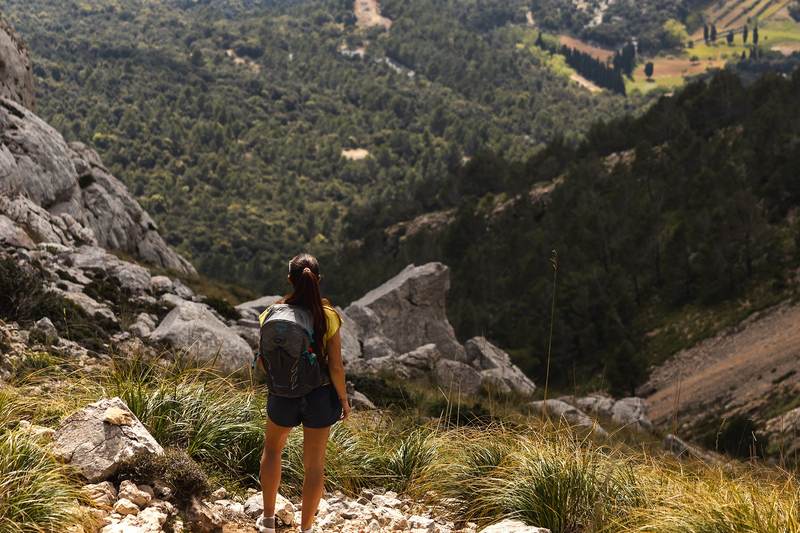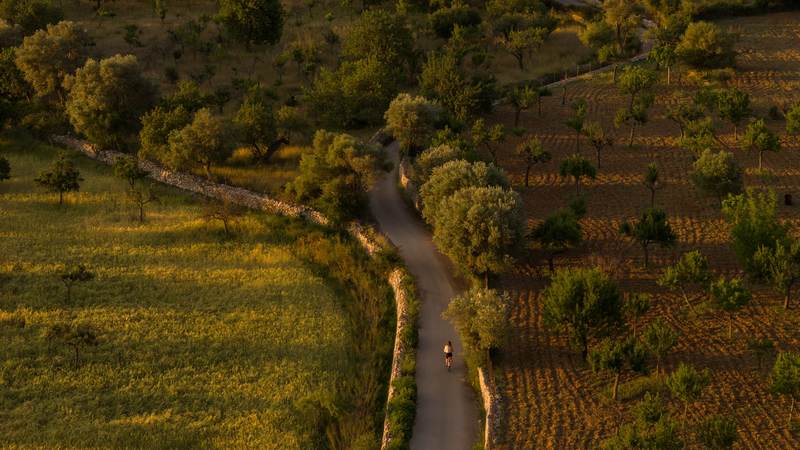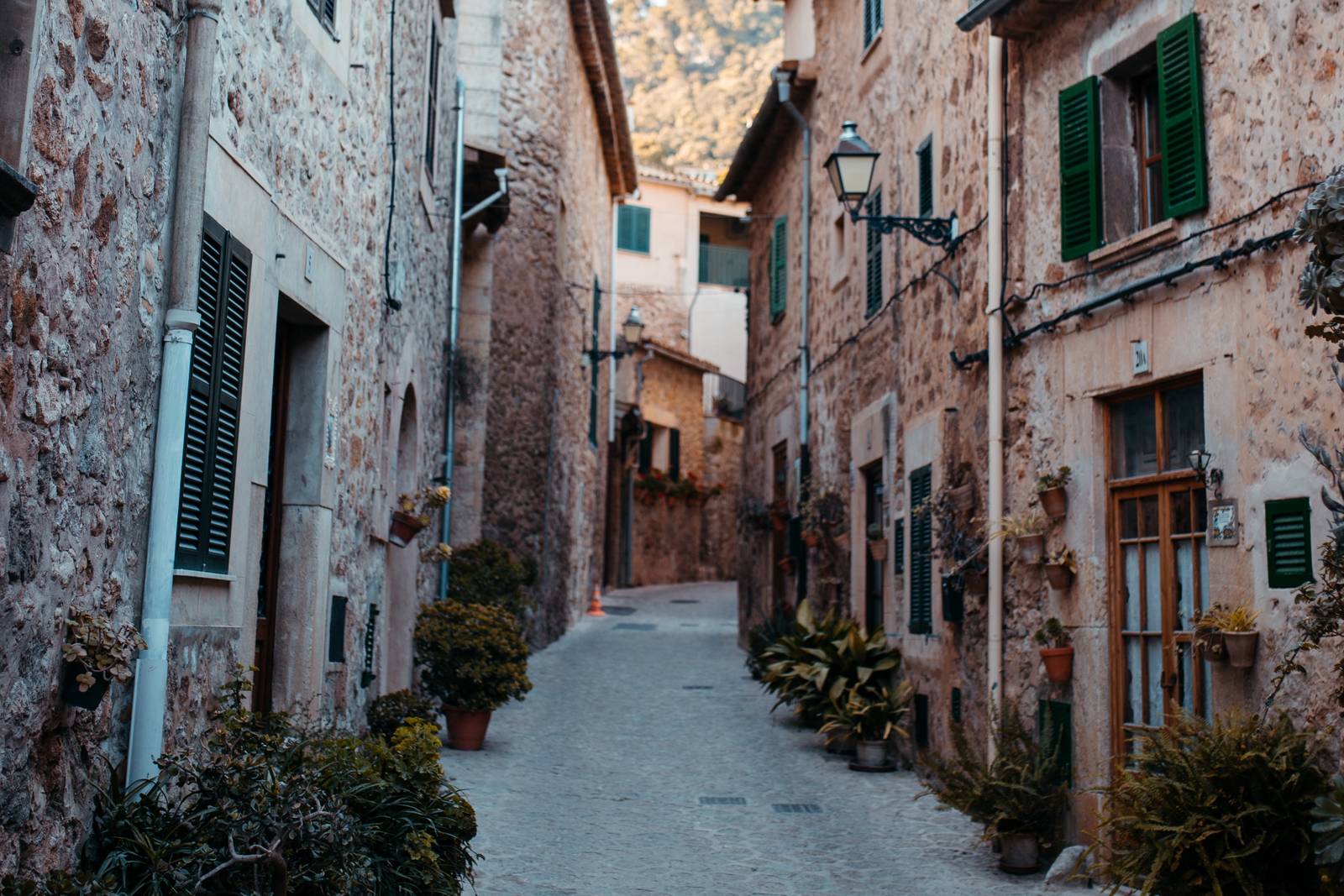
Most visitors meet Mallorca along its coast. The island that Mallorcans themselves grew up in is mostly inland: market towns on the plain, stone villages wedged into mountain valleys, church towers you can see from the next village. None of the places below has a beach. All of them reward an unhurried morning, a long lunch and a walk that starts in the square.
What counts as inland
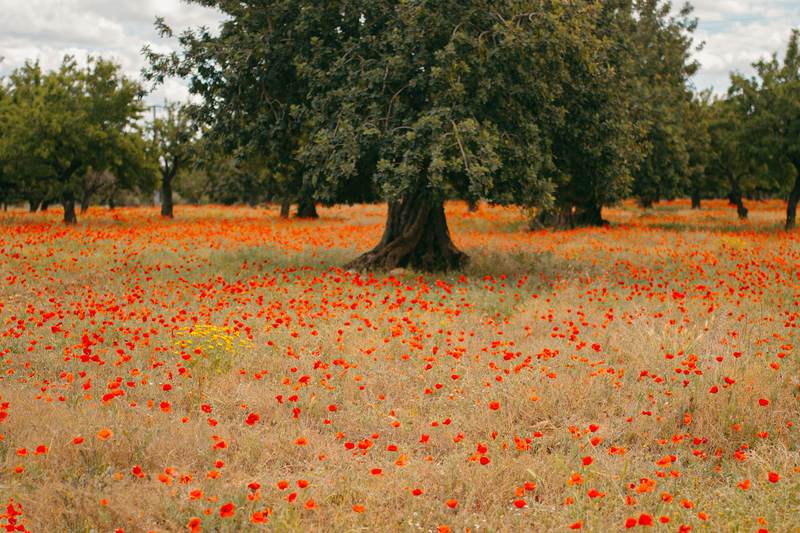
We use the word loosely. The list covers villages in the Serra de Tramuntana that live with their backs to the sea, and towns of the central plain, the Pla de Mallorca, where the island's farming life still sets the calendar. Deià is technically a coastal village; it is here because it lives like a mountain one. We have left out Palma and the resort towns on purpose.
Fornalutx and Biniaraix
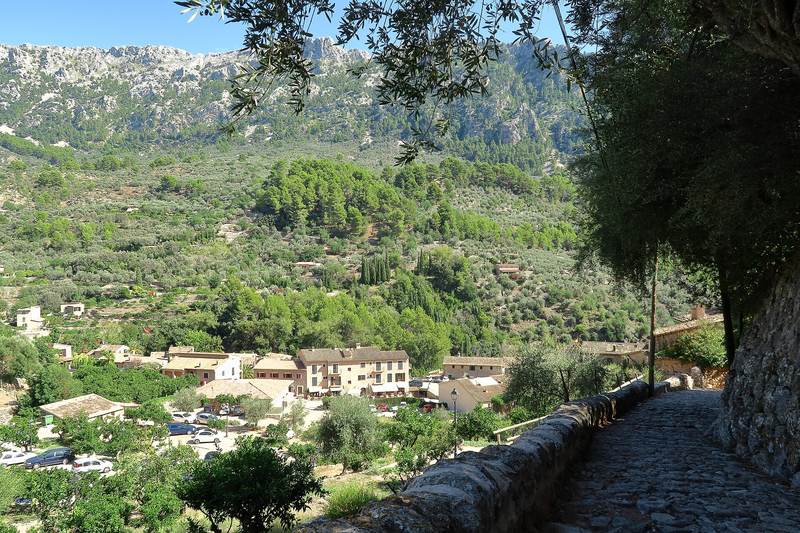
Sóller valleySerra de Tramuntana
Fornalutx climbs the side of the Sóller valley in steps, stairs and narrow lanes of honey-coloured stone, with green shutters and the Puig Major, the island's highest mountain, behind it. It is small enough to cross in ten minutes and pretty enough to take an hour. Below it, the hamlet of Biniaraix is the start of one of the island's great walks: the cobbled mule track up the Barranc de Biniaraix, a gorge of terraces and olive trees that climbs towards the Cúber reservoir. Walk up in the morning and come back down for lunch in Fornalutx.
Go for: the walk, the views back over the orange groves, the lanes before eleven in the morning.
Valldemossa
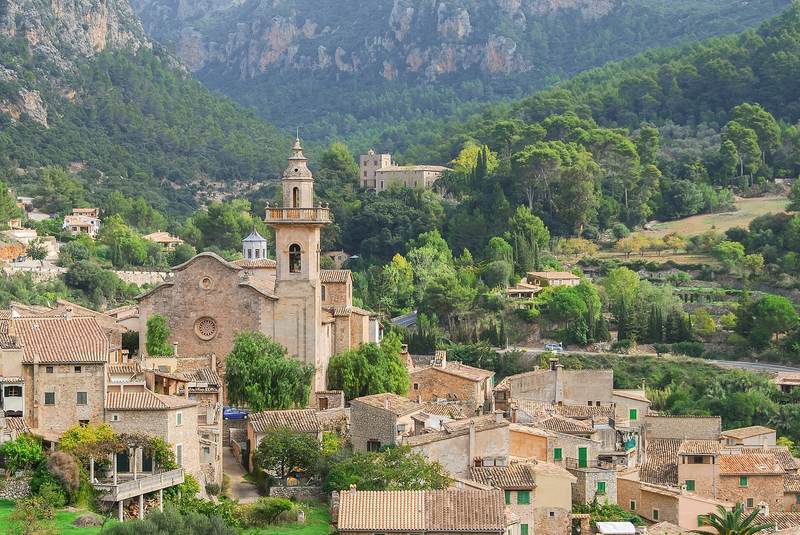
Serra de TramuntanaSunday market
The highest village on the road from Palma to the north coast, built around the Carthusian monastery where Frédéric Chopin and George Sand spent the winter of 1838 to 1839. Sand's account of that unhappy, rainy season, A Winter in Majorca, made the village famous. The cells, the cloister and the old pharmacy can be visited. Valldemossa is also the village of Santa Catalina Thomàs, the island's own saint, and many houses carry a small painted tile in her honour beside the door.
Go for: an early visit before the coaches, then the walking paths into the holm oak woods above the village. Try a coca de patata, the soft potato bun the village is known for.
Deià
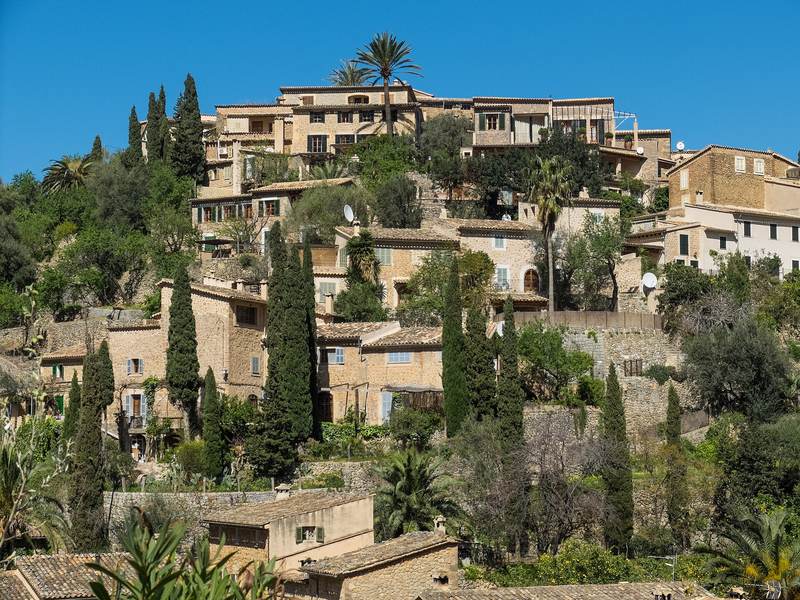
Serra de TramuntanaHillside village
A cluster of stone houses on a hill between steep mountains and the sea, crowned by a church and a small cemetery where the poet Robert Graves is buried. Graves lived in Deià for most of his life, and his house, Ca n'Alluny, is open as a museum. The village has long attracted painters, musicians and writers, and it still feels like a place where people come to work rather than to tick something off.
Go for: the walk down the old path to the little cove, Cala Deià, and the late-afternoon light on the terraces.
Orient
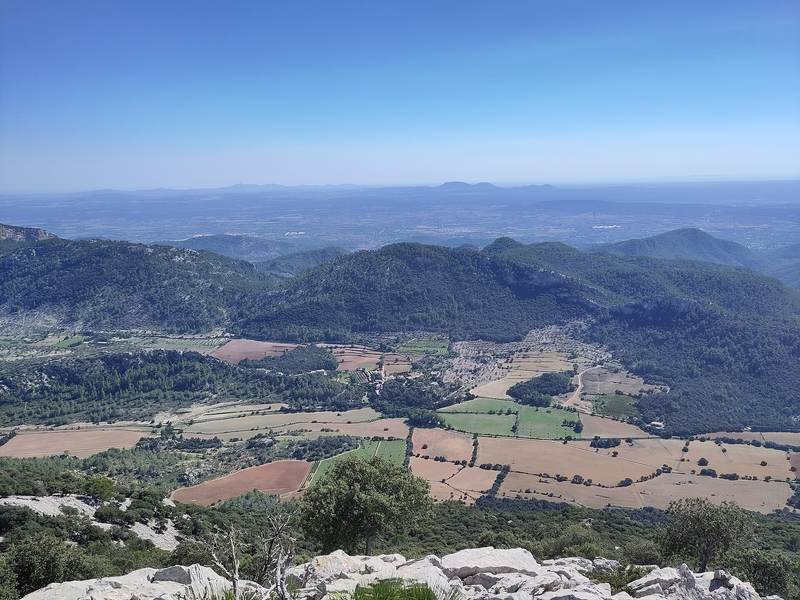
Bunyola municipalityMountain valley
Barely a village: a church, a few stone houses, a couple of restaurants and a hotel or two, in a high green valley between Bunyola and Alaró. The road in is narrow and slow, which is exactly why Orient keeps its calm. In late winter the valley floor is white with almond blossom; in autumn it smells of wood smoke.
Go for: silence, a long Sunday lunch, and the start of the path towards the Castell d'Alaró.
Alaró
Foot of the TramuntanaSaturday market
A working town at the foot of two flat-topped mountains, Puig d'Alaró and s'Alcadena. On top of the first sit the ruins of the Castell d'Alaró, a medieval fortress, and a simple hostatgeria that serves lunch to walkers. The climb from the road below takes around an hour, on a path that ends with a stone gateway and the whole island at your feet.
Go for: the castle walk, and the square afterwards.
Selva, Caimari and Binibona
Southern foothillsOlive country
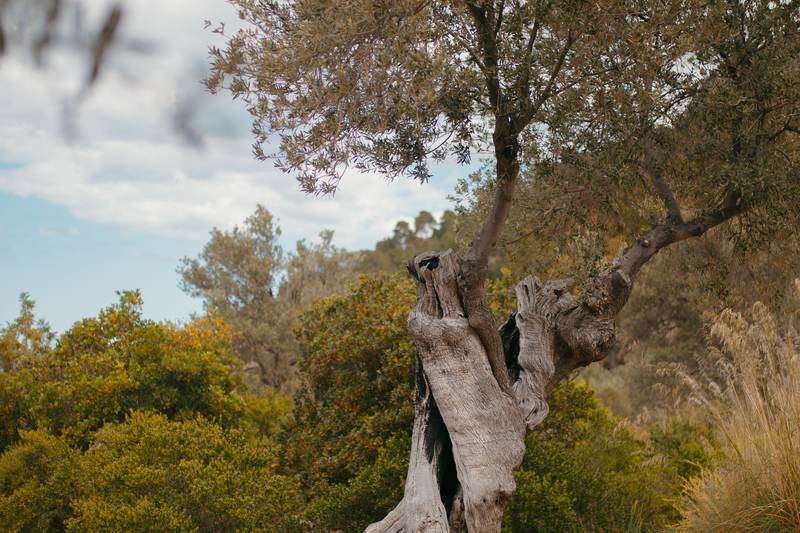
Three small places on the inland edge of the mountains, on the road from Inca up to Lluc. Selva has one of the island's most striking village churches, set on a hill at the top of a long stone staircase. Caimari, a few minutes further up, is surrounded by terraces of ancient olive trees and is known for its olive oil; its olive fair in the autumn is a good excuse to visit. Binibona is a hamlet of a few houses and some of the area's quietest fincas, with walking paths straight into the mountains.
Mallorca Unfolded is published by the owners of Ca'n Beneït and Mirabona, which are in Binibona. We include these villages because they belong on any list of the island's inland beauty, and we tell you about our link so you can weigh our view.
Go for: the steps of Selva, the olive terraces of Caimari, and the walk from Binibona towards the old paths to Lluc.
Pollença
Northern TramuntanaSunday market
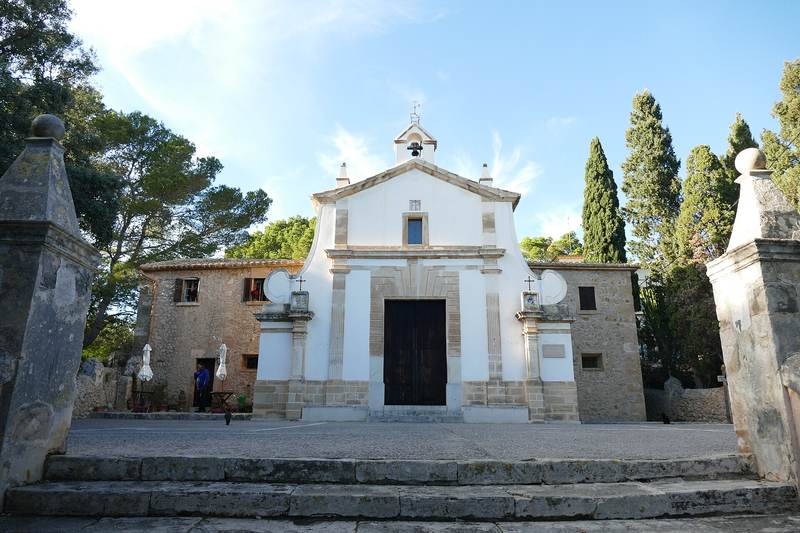
A handsome old town set back from its bay, with a square that fills with tables at dusk and a Sunday market that takes over the centre. Its signature is the Calvari: 365 stone steps lined with cypress trees, one for each day of the year, rising from the town to a small chapel with a wide view over the bay and the mountains. On Good Friday the steps become the stage for one of the island's most solemn processions, the Davallament.
Go for: the steps at sunrise or sunset, and the Roman bridge on the way out of town.
Sineu
Pla de MallorcaWednesday market
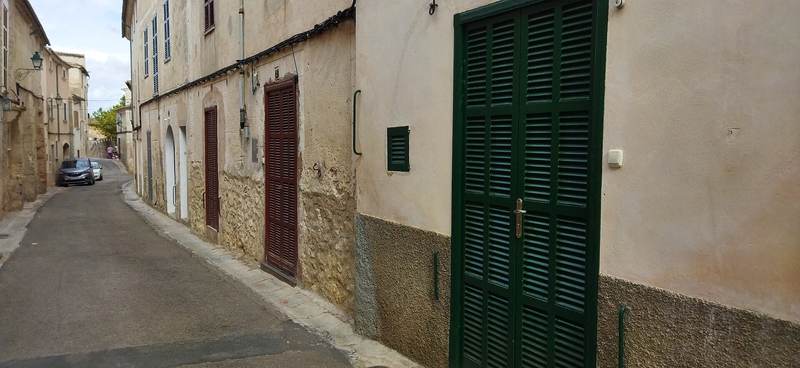
The geographical heart of the island, and for centuries one of its royal towns. Sineu's Wednesday market is the oldest on Mallorca and still a real farmers' market, with livestock in the upper part of town as well as produce, cheese, sobrassada and the occasional sheep in a trailer. On other days Sineu is quiet, with a large church, a winged lion statue in front of it and some good, plain places to eat.
Go for: Wednesday morning, early, then lunch in town once the stalls pack up.
Petra
Pla de MallorcaWednesday market
A grid of sand-coloured streets on the plain, best known as the birthplace of the Franciscan friar Junípero Serra, who founded the first missions in California in the eighteenth century. His family house and a small museum can be visited. Outside town, a road climbs to the hermitage of Bonany, with one of the best views over the whole plain.
Go for: the quiet, the plain at almond-blossom time, and the view from Bonany.
Artà
North-east MallorcaTuesday market
Artà is a town of steep lanes climbing to the walled sanctuary of Sant Salvador, whose battlements look out over the eastern hills and towards the sea. Just outside town is Ses Païsses, one of the best-preserved prehistoric talaiotic settlements on the island, under holm oaks and wild olives. In January Artà celebrates Sant Antoni with some of the island's most famous bonfires and demons.
Go for: the walk up to Sant Salvador, then Ses Païsses in the afternoon.
Market days at a glance
A village is twice as alive on its market morning. These are the weekly markets for the villages above, as published by the island's tourist information; most run from about 8am to 1pm. Some villages have more than one market a week, and summer schedules can differ.
| Day | Villages in this guide |
|---|---|
| Tuesday | Artà |
| Wednesday | Sineu, Petra, Selva |
| Saturday | Alaró, Sóller |
| Sunday | Pollença, Valldemossa, Santa Maria del Camí |
This is an editorial selection, not a ranking. We favoured villages that still have a daily life of their own, and we left out places where the visit is mostly about the beach. Nobody paid to be included.