On the coast, most menus are written for people who will never come back. Inland, restaurants cook for people who come every Sunday, which changes everything: the portions, the pace, the tolerance for a bad rice. The interior of Mallorca has its own food culture, built on pork, lamb, olive oil, almonds, bread and wine, and on the old wine cellars that became the island's first restaurants. This guide follows it from the plain to the mountain villages, with the places we would send a friend.
The cellers: Mallorca's original restaurants
A celler was a wine cellar: a cool, half-buried room of barrels where farmers stored the year's wine. As the vineyards declined, many cellers started feeding the people who came to drink there, and became restaurants. They are still the best introduction to Mallorcan cooking: big rooms, old barrels, and a menu of dishes that grandmothers would recognise.
Es Celler, Petra
PetraTraditional Mallorcan
You go down a flight of steps from the street into an old wine cellar, and the room is so unremarkable from the outside that people walk past it. Underground, it is the real thing: stone walls, barrels and a menu of the island's classics, with frit mallorquí, arròs brut and snails among the dishes regulars come back for. It gets busy at weekends, when locals book whole tables for family lunches; reserve, and be ready to wait even then.
Celler Can Amer, now in Lloseta
LlosetaMallorcan, family-run
For half a century Can Amer was the celler of Inca. José Torrens and Antonia Cantallops took it over in 1970; people in the trade still call Antonia the mother of Mallorcan cooking. Their son Tomeu Torrens, who joined the kitchen in 1990 and later took over, moved the restaurant to nearby Lloseta in 2020.
Mountain tables
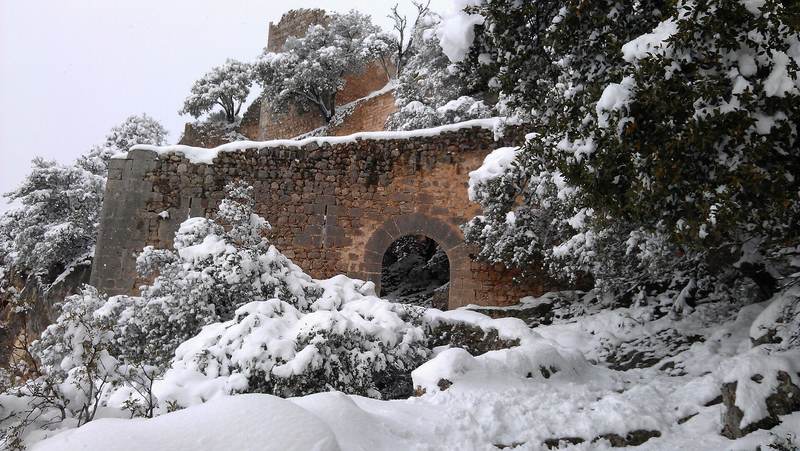
The Tramuntana has a cooking of its own: slow-roasted lamb from animals that graze the terraces, kid, rabbit, wild mushrooms in autumn, and long lunches that are the whole point of the day.
Es Verger, Alaró
Above Alaró, on the castle roadFarmhouse kitchen
A farmhouse halfway up the Puig d'Alaró, reached by a narrow mountain road full of hairpins or, better, on foot. Everyone knows it as the lamb restaurant, and the shoulder of lamb is the reason to come. The classic plan is to walk up to the Castell d'Alaró in the morning and come down to Es Verger for lunch. Book for weekends, and arrive in good time: the lamb can run out.
Ca n'Antuna, Fornalutx
FornalutxMallorcanTerrace
A long-established village restaurant on the edge of Fornalutx, with a terrace that looks straight across the orange and olive terraces of the Sóller valley to the mountains. The menu is unapologetically Mallorcan: roast lamb, suckling pig, frit mallorquí, arròs brut. Book at weekends; on Sundays especially, walk-ins wait.
A roadside institution
Cal Dimoni, Algaida
Palma–Manacor road, km 21Grill and Mallorcan classics
On the main road across the plain, a rustic, busy, much-loved restaurant full of Mallorcans. The menu is short and meat-heavy: porcella (suckling pig), lamb chops, roast lamb, grilled sobrassada and botifarró, and arròs brut. Vegetarians will struggle. Free parking, terrace and dining room; ring ahead on Sundays.
The new inland kitchen
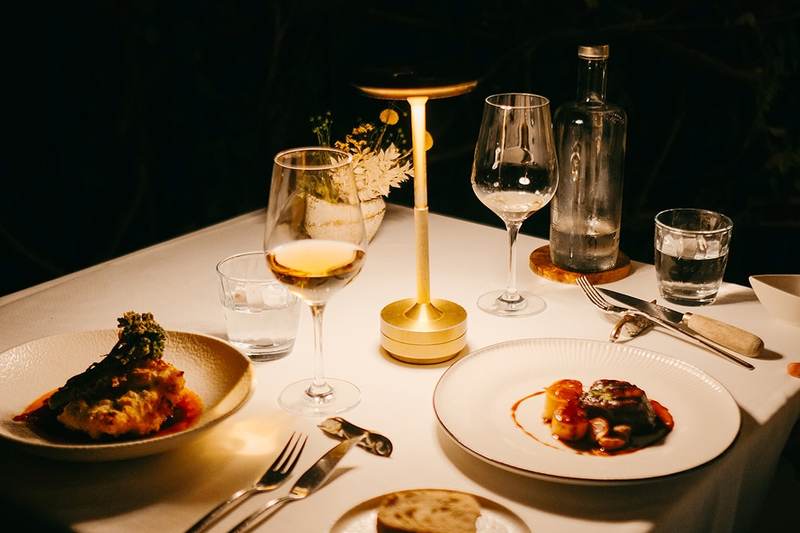
A younger generation of cooks has stopped treating Mallorcan food as something to apologise for. They grow their own vegetables, buy from the farmer down the lane, cook to the season, and serve the island's wines. The results are some of the most interesting meals on the island, and none of them is by the sea.
Ca Na Toneta, Caimari
CaimariSeasonal MallorcanTasting menu
Chef Maria Solivellas and her sister named their restaurant after their grandmother and built it around a single tasting menu that changes with the seasons, using vegetables from their own garden and ingredients from the island. The experience is split between two village houses, one with a small shop of local products, and a vine-covered terrace. Book well ahead, and check the days it opens.
Mirabona, Binibona
Binibona, near CaimariSeasonal menusOpen to non-residents
Mirabona is the restaurant of Ca'n Beneït, owned by the same people who publish Mallorca Unfolded. We include it because a guide to eating in this corner of the island would be incomplete without it, and we tell you so plainly. Judge it against the other places on this page.
The restaurant of the Ca'n Beneït estate, at the foot of the Tramuntana a few minutes from Caimari. The kitchen works from the estate's own garden and from island producers, with seasonal menus and a wine list with a strong Mallorcan section. It is open to guests from outside the hotel during the season. It closes in winter and reopens on 25 February 2027.
Bakers and oil
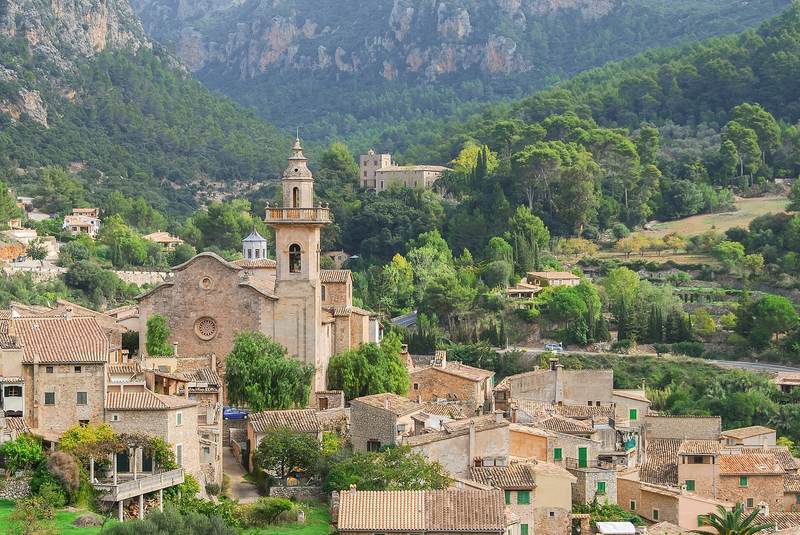
Ca'n Molinas, Valldemossa
ValldemossaBakery, since 1920
Valldemossa's sweet is the coca de patata, a soft, round bun made with potato, and Ca'n Molinas has been baking it since 1920. The bakery on Via Blanquerna has a garden at the back where you can eat it warm with a coffee. The apricot version sells out early.
Oli Caimari, Caimari
CaimariOlive oil
Caimari is surrounded by old olive terraces, and the Mateu family has bottled the village's oil under the name Oli Caimari since 1966. Stop for oil and table olives on the way up to Lluc. In November the village holds its Fira de s'Oliva, the olive fair, created in 1998 to celebrate the harvest.
Cooperativa Agrícola de Sóller
Sóller, on the Fornalutx roadFarm shop
The valley's farmers' cooperative sells what the valley grows: fruit, vegetables, olive oil, cheese, bread, preserves, and wine from the barrel that locals swear by. A better souvenir than anything in the shops on the square.
Wine country
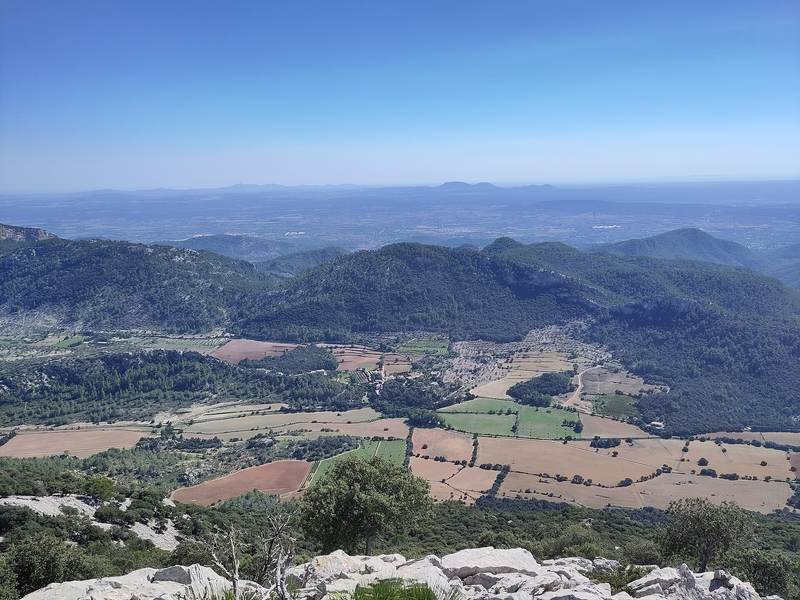
The central plain around Binissalem and Santa Maria del Camí is the island's oldest wine district, with its own designation of origin, DO Binissalem, and local grapes you will not find elsewhere, such as Manto Negro, Callet and Prensal Blanc.
Bodegas José L. Ferrer, Binissalem
BinissalemFounded 1931Tours and tastings
One of the oldest and best-known wineries on the island, a family business at the entrance to Binissalem, now in its fourth generation. Guided visits and tastings run from Monday to Saturday and need booking. Ask to taste the wines made from the local varieties.
Macià Batle, Santa Maria del Camí
Santa Maria del CamíGuided visits
A winery near Santa Maria del Camí, with guided visits in English, Spanish and German. Combine it with the Sunday market in Santa Maria and lunch in the village.
Markets
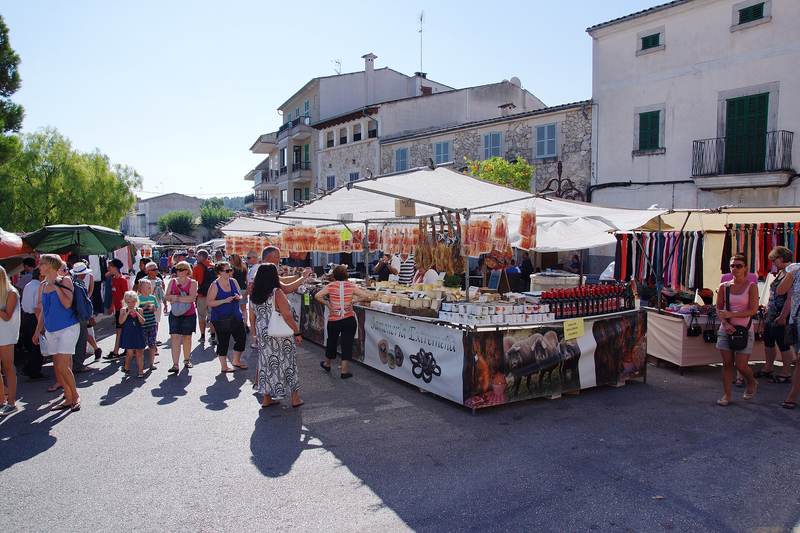
The weekly market is where inland Mallorca shops, and the best way to see what is in season. Sineu on Wednesday is the oldest and still a farmers' market, with livestock alongside the produce. Santa Maria del Camí on Sunday is known for local produce and wine. Go early, bring cash, and buy sobrassada, local cheese, almonds, olives and whatever fruit is piled highest. Our market-day table has the rest.
What to order
| Dish | What it is |
|---|---|
| Frit mallorquí | A fry-up of lamb or pork offal with potato, peppers and fennel. Better than it sounds. |
| Arròs brut | "Dirty rice": a brothy, spiced rice with meat and vegetables, a winter and Sunday dish. |
| Sopes mallorquines | Thin slices of dark bread soaked in a vegetable broth with cabbage. Peasant food at its best. |
| Tumbet | Layers of fried potato, aubergine and pepper with tomato sauce. The vegetarian's friend. |
| Porcella | Roast suckling pig, with crackling skin. |
| Sobrassada | Soft, paprika-red cured pork sausage, spread on bread or grilled, sometimes with honey. |
| Pa amb oli | Bread rubbed with tomato and olive oil, topped with cheese or ham. The island's everyday lunch. |
| Ensaïmada | The coiled, lard-enriched pastry dusted with sugar. Breakfast, not dessert. |
| Herbes | The island's anise-and-herb liqueur, offered at the end of a long lunch. |
How to eat inland
Lunch is the main event. Inland restaurants are busiest at midday, especially at weekends, and many village kitchens are quieter or closed in the evening.
Book at weekends. Sunday lunch is a family institution. The places in this guide fill up with Mallorcans, which is the point.
Check the season. Many restaurants close for part of the winter or on fixed days of the week. Ring or check their own pages before you drive into the mountains.
Eat the vegetables too. Mallorcan cooking is famous for pork and lamb, but tumbet, sopes and a market salad of tomàtiga de ramellet, the island's hanging tomatoes, are just as much a part of it.
These are places with a real connection to the food of the interior, checked against their own and other published information as of November 2026. We do not list prices, opening hours or awards that we cannot confirm, and nobody paid to be included. Mirabona is ours, and we say so above.